How Safe Is a Drone Show?
#Drone Shows
Professional drone shows can take place even in wind and rain. Lunatx drone shows can be operated safely and reliably at wind speeds of up to 9 m/s. The IO Star 3 drones we use were co-developed with us specifically for professional outdoor use.
Whether a show can actually go ahead is always assessed based on the specific conditions at the event location. In addition to wind speed, factors such as gusts, precipitation, temperature, visibility and the risk of icing are taken into account. (As of August 2026)
For a safe and stable drone show, wind speeds of up to 9 m/s are well within our operating range. Within these conditions, our systems maintain precise flight stability and reliable choreography.
This makes our drone shows up to 1 m/s more wind-resistant than comparable pyrotechnic shows.
However, wind speed at ground level is not the only factor that matters.
Wind speeds can increase with altitude. Buildings, terrain and other obstacles can also create local airflow patterns and wind gusts.
For this reason, show conditions are never assessed solely on the basis of a weather app.
An animated eye in a pixel-mapping style becomes part of the drone show.
The IO Star 3 drones we use feature an integrated wind estimation system. During flight, the system uses data from the inertial sensors, among other inputs, to estimate the average wind speed.
Before a show, test flights with individual drones can therefore be carried out to assess the wind conditions at the actual flight altitude more accurately.
In addition, different sources of information are cross-checked, including:
Average wind speed is not the only factor that matters. Wind gusts can be more critical to a drone show than steady wind.
Strong winds can cause:
Therefore, the final operational go/no-go decision is always based on the actual conditions on site.
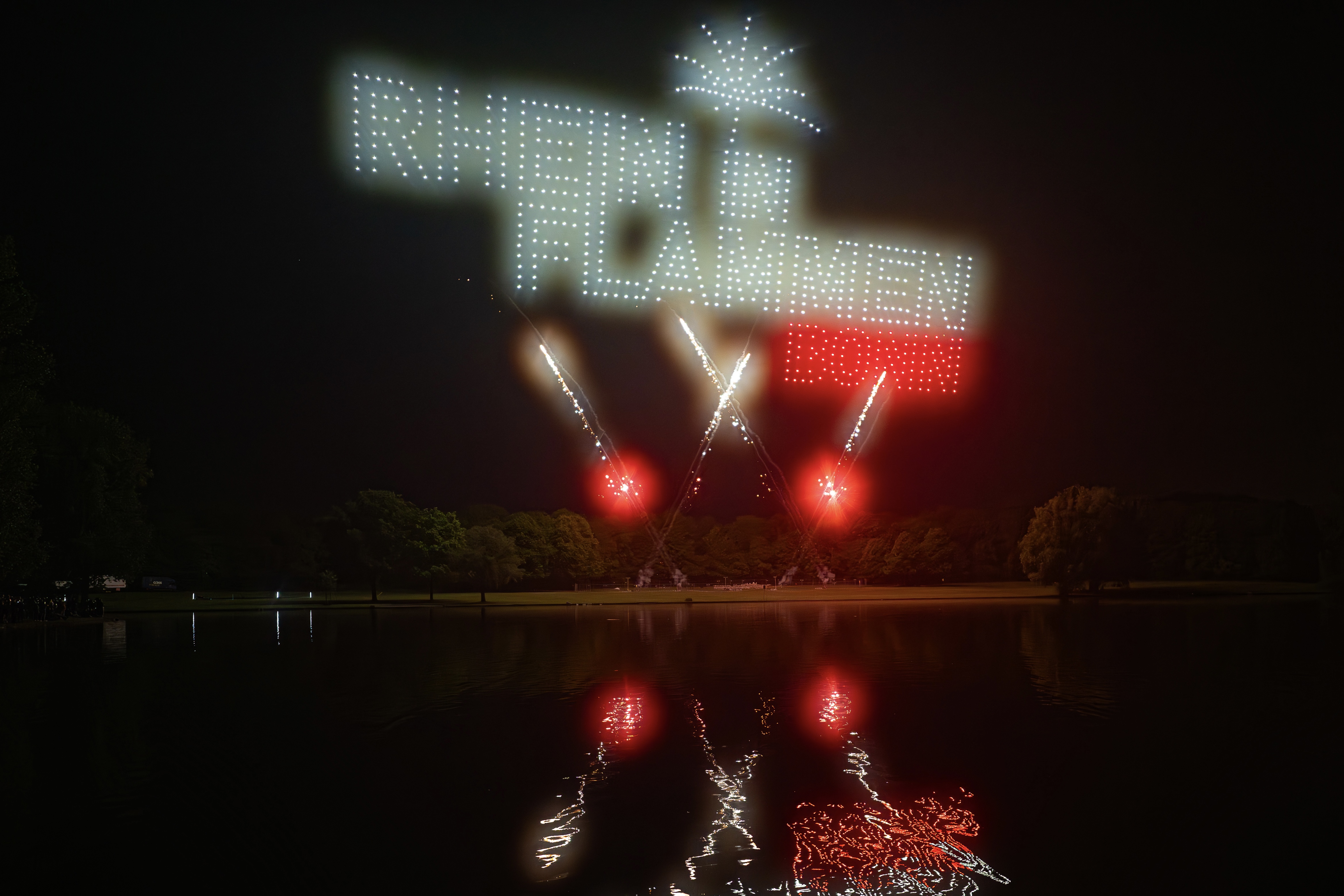
A visual journey through 40 years of Rhein in Flammen
Yes. Rain does not automatically rule out a drone show.
The IO Star 3 systems are designed for professional outdoor use. We can operate in heavy rain with precipitation rates of up to 7 mm per hour.
However, the combination of rain, wind and low temperatures may require a different assessment than light rain under otherwise stable conditions.
No.
In addition to moisture, the risk of ice formation is a key factor.
Snow or icing can alter the aerodynamic properties of the propellers and affect flight stability.
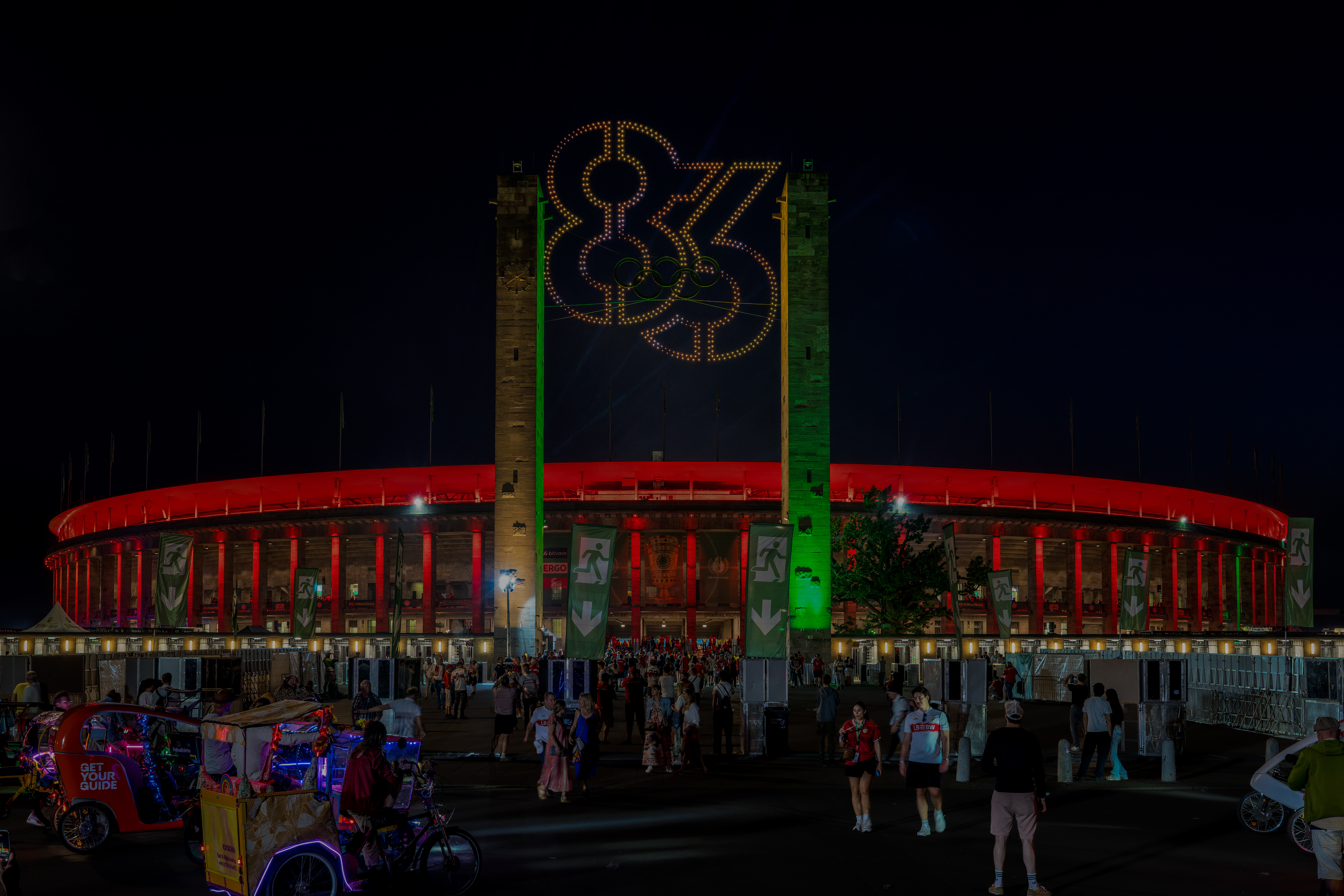
Impressive aerial visuals for an audience of millions
It depends on how dense the fog is.
In addition to moisture and potential condensation, visibility conditions can also be relevant for safe operation.
For this reason, the specific conditions at the event location are assessed in each case.
Lunatx drone shows have an operating temperature range of 0 °C to 40 °C.
However, battery performance becomes particularly important at low temperatures.
Cold temperatures reduce the available battery capacity.
For shows in cold temperatures, the batteries are prepared accordingly and the available flight time is planned with an additional safety margin.
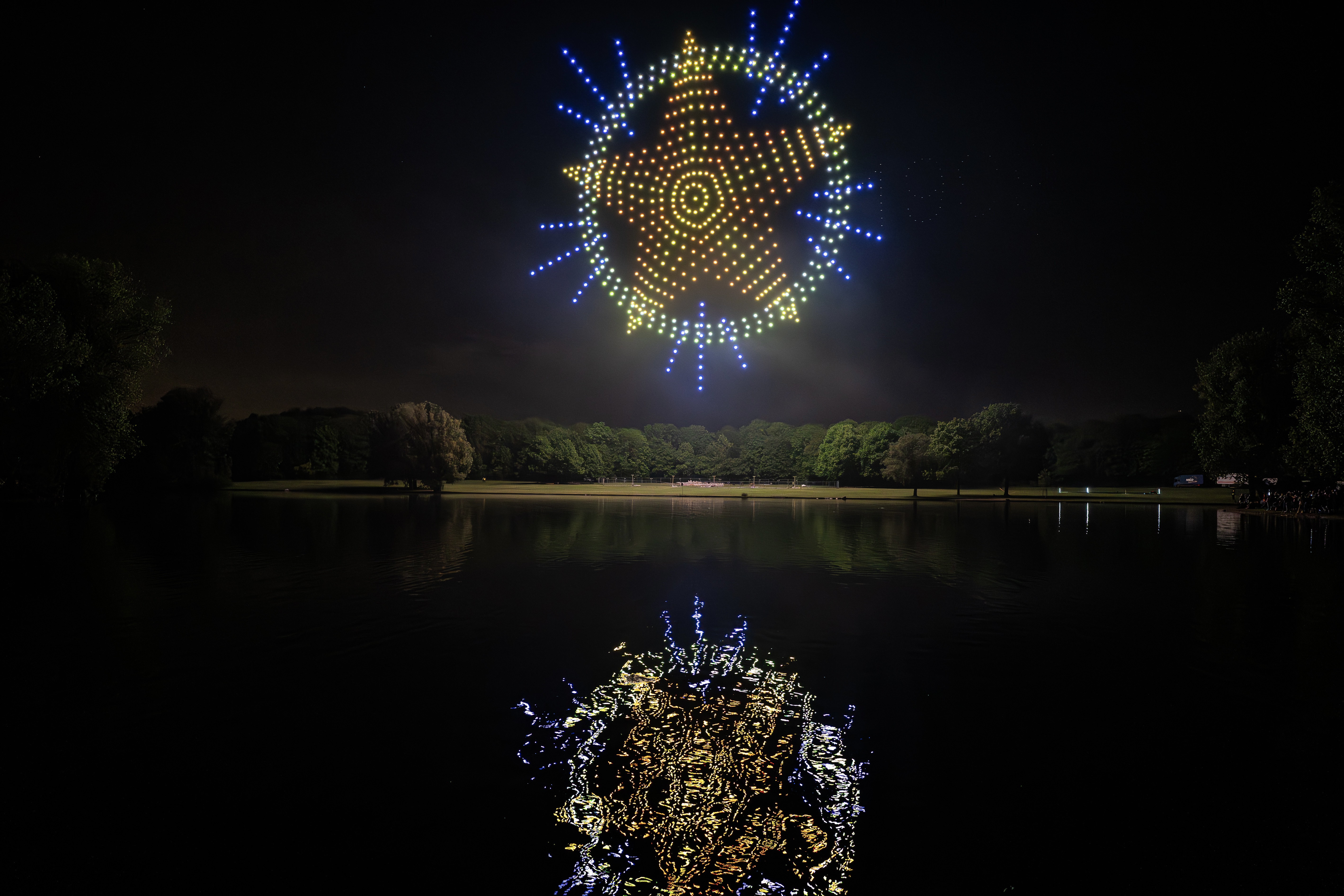
Light production for 40 years of Rhein in Flammen
Drones require energy throughout the entire flight to power their motors, electronics, communication systems and lighting.
At low temperatures, batteries provide less usable capacity. At the same time, conditions such as wind can increase the energy required during the show.
Therefore, there is no universally guaranteed maximum duration for a drone show.
Most Lunatx drone shows last around 15 to 20 minutes. Shorter and longer shows are also possible.
The most suitable show duration depends on factors including:
The show duration is therefore tailored to the specific project during the programming stage.
Yes – however, the technical flight time and the appropriate duration of a professional drone show are two different things.
Under ideal conditions, flight times of up to 40 minutes are possible with the high-capacity battery.
However, these figures are based on stationary flight in low-wind conditions, with the LEDs switched off and the battery discharged from 100% to 0%. They should therefore not be interpreted as realistic show durations.
A real-world choreography includes movement, climbs and descents, active LEDs and the necessary safety margins.
That is why we tailor both show duration and choreography to each individual project.
High humidity alone cannot be meaningfully assessed using a single fixed percentage threshold.
What matters more is the specific effect those conditions have on the operation.
The combination of humidity and sub-zero temperatures is particularly relevant, as it can lead to icing. Ice forming on the propellers reduces lift and can significantly compromise flight safety.
Therefore, drone shows must not be operated in icing conditions.

Two Jever Pilsener bottles clink together as a light animation in the night sky.
No.
The same applies to conditions involving heavy dust or ash.
In these weather conditions, safety takes priority over proceeding with the show.
The weather decision is not based solely on a forecast made several days in advance.
On the day of the event, the actual conditions are reassessed. Factors may include:
The responsible operations team assesses these factors together with the technical system data.
A planned show will only go ahead if it can be operated safely under the actual conditions on site.
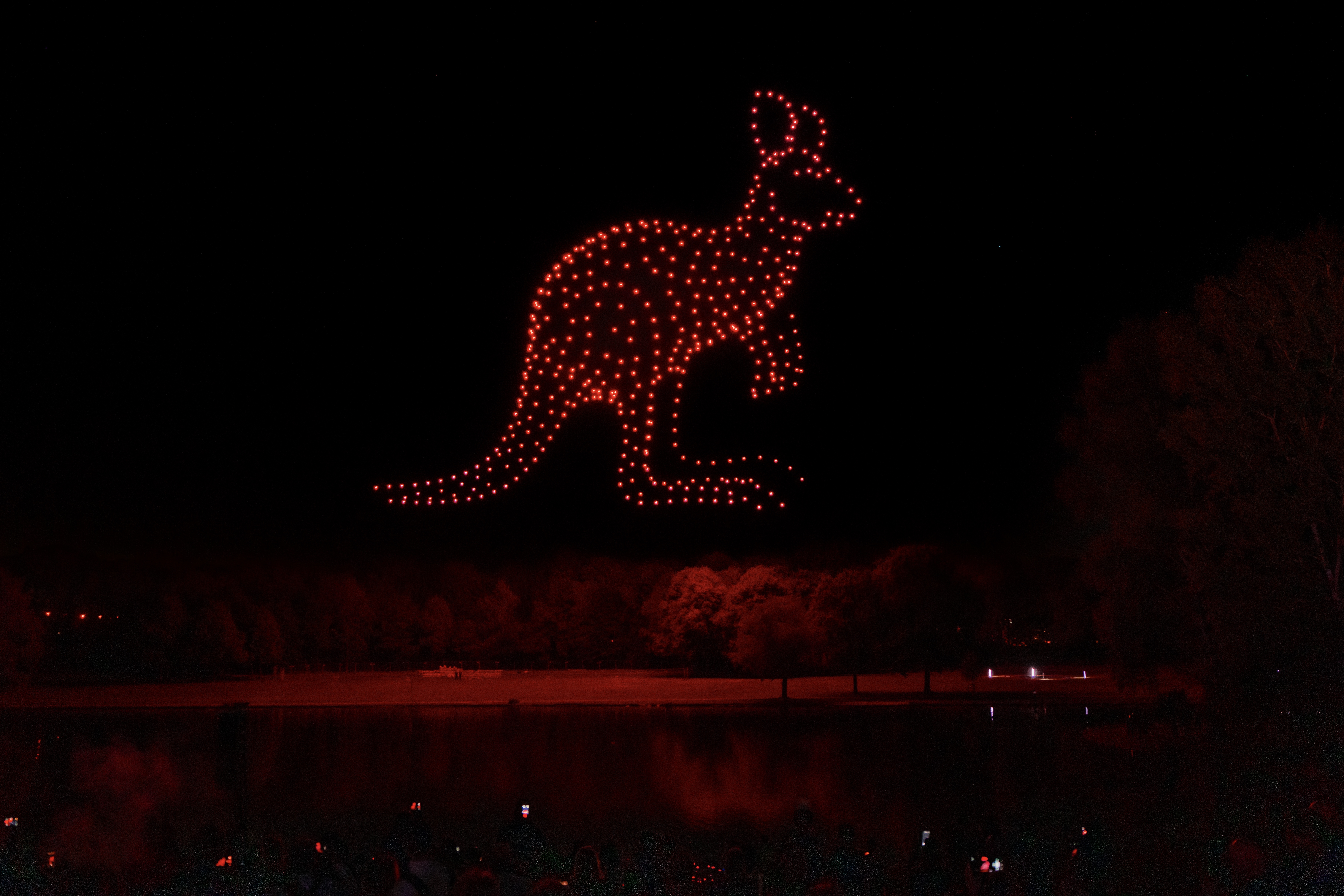
Drones transform the sky into a stage
No.
An unfavourable weather forecast several days before the event does not automatically mean that a drone show cannot take place.
Weather models can change, and many weather events are temporary. Drone shows can also still be operated in conditions such as wind or light rain.
For this reason, we monitor how conditions develop and make operational decisions based as closely as possible on the actual conditions at the relevant time.
The options available for a specific project are discussed as part of the planning process.
possible without issues
generally possible
no operation
no operation
no operation
no operation
operating temperature range
reduced battery performance and potentially shorter show duration
no operation
*For general guidance only. The final go/no-go decision always takes the full set of conditions at the specific location into account.
For a safe and stable Lunatx drone show, wind speeds of up to 9 m/s are well within our operating range. Wind gusts and conditions at flight altitude are also taken into account.
Lunatx drone shows can be operated safely and reliably at wind speeds of up to 9 m/s, making them up to 1 m/s more wind-resistant than comparable pyrotechnic shows.
Yes. Rain is generally possible. However, we do not operate in very heavy rain above 7 mm/h.
Generally, yes, as long as the technical and meteorological conditions are met. This includes an operating temperature range of 0 to 40 °C. At lower temperatures, battery performance is reduced, which must be taken into account during planning.
Cold temperatures reduce battery capacity. Wind and choreography also affect energy consumption. Most Lunatx drone shows last around 15 to 20 minutes, although the actual duration is determined on a project-by-project basis.
The conditions are monitored up until the start of the show and assessed on site. If a safe operation is not possible, the show will not go ahead. However, a poor forecast several days in advance does not automatically mean the show has to be cancelled.
Weather is an integral part of professional drone show planning from the very beginning. We assess the conditions at the event location, take seasonal factors into account and evaluate the actual conditions before take-off.
Are you planning an event and want to know whether a drone show is possible at your location?
#Drone Shows
#Drone Shows
#Drone Shows

#Drone Shows

#Drone Shows