What weather conditions can a drone show operate in?
#Drone Shows
Professional drone shows are subject to comprehensive technical, operational and aviation safety requirements. At Lunatx SFX, every show is planned and assessed on a project-specific basis. This includes clearly defined flight and safety areas, checks of the event location and surrounding airspace, weather monitoring, pre-flight checks and continuous monitoring of the drones throughout the show.
Lunatx SFX operates drone shows as UAS operations in the specific category under European drone regulations and works on the basis of an operational authorisation issued by the Luftfahrt-Bundesamt.
Safety planning starts long before the drones take off.
The conditions at each event location are assessed during the project planning stage. This includes factors such as:
Based on this assessment, the specific operational scenario is planned.
The operational authorisation for drone shows in the specific category is based on a risk assessment. This takes into account factors such as risk mitigation measures, the competence of the crew and the technical characteristics of the drone system.
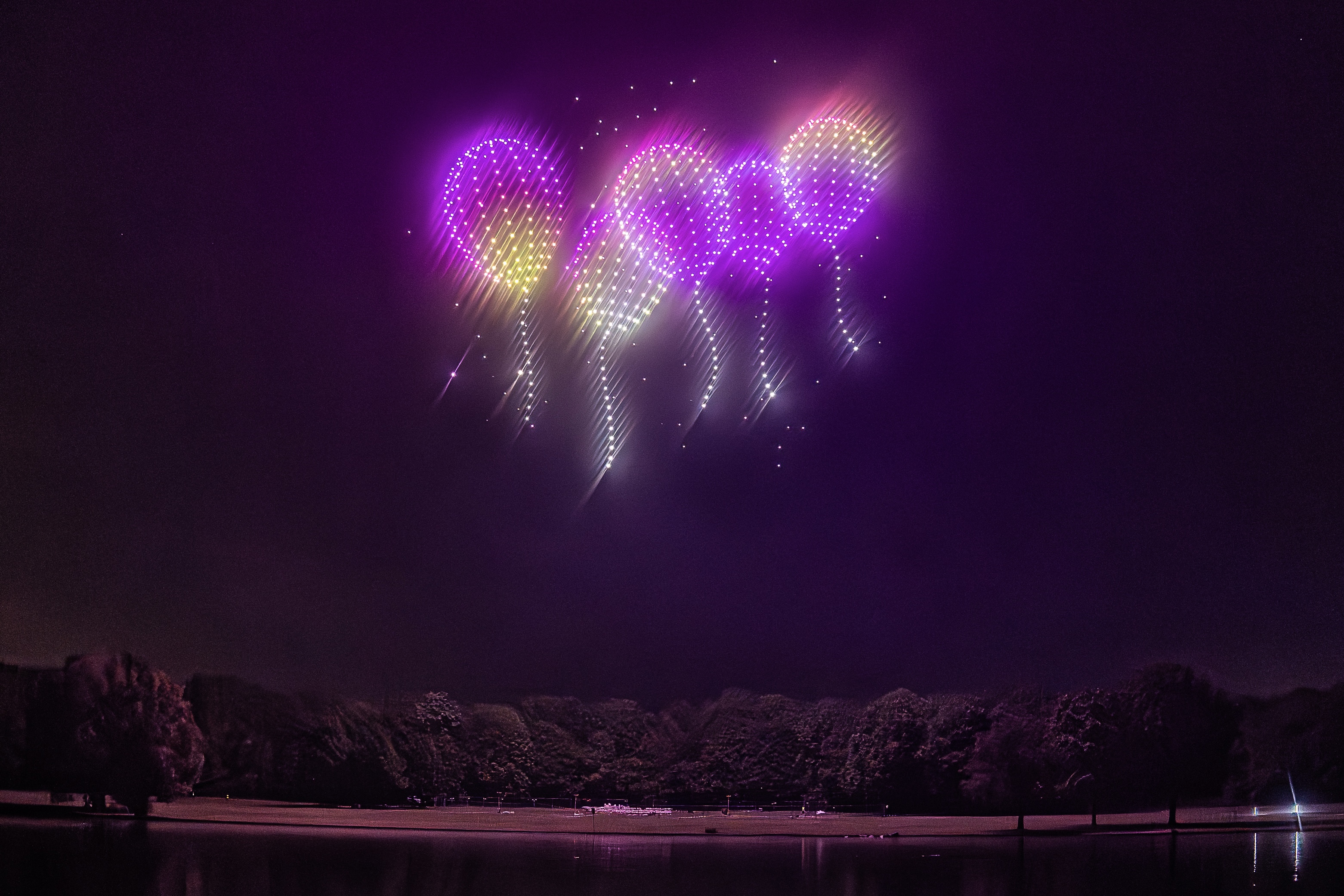
Visual production marking the farewell to the Rheinaue
A professional drone show is never operated over people.
The flight area, audience area and required safety zones are coordinated during the planning stage. Depending on the location and operational scenario, this results in different distance and space requirements.
There is therefore no single fixed safety distance that applies to every drone show. It is defined based on the specific project and the underlying risk assessment.
That is why the audience position is one of the most important pieces of information during the initial feasibility assessment.
The IO Star 3 drones used by Lunatx SFX rely on RTK-GNSS for precise positioning.
An RTK base station calculates correction data and transmits it to the drones. With a full RTK fix, positioning accuracy of up to one centimetre can be achieved. This requires, among other things, a suitable GNSS signal, the RTK base station and a reliable data connection. (As of August 2026)
Each drone follows a pre-programmed flight path throughout the show. The formation is not flown manually in real time, but fully choreographed in advance.
The IO Star 3 features a Geoguard system.
The system defines a designated spatial area for the show. If a drone is detected leaving this predefined area, the corresponding safety mechanisms are triggered.
The Geoguard function is tested before every show. Activating and verifying the Flight Termination System is part of the mandatory Geoguard test before take-off.
This provides an additional technical safeguard to keep the drones within the planned flight area.
The drone system is equipped with numerous automatic safety mechanisms, known as failsafes.
These respond to a range of situations, including:
Depending on the situation, the system can trigger a return to the take-off point, a controlled landing or flight termination.
The purpose of these mechanisms is not to keep the show running under all circumstances, but to transition the system into a predefined safe state if a technical deviation occurs.
Laser show and drone technology in perfect interplay
Yes.
The IO Star 3 features an independent Flight Termination System (FTS), allowing a drone’s motors to be shut down if necessary.
The system is designed with redundancy: communication and activation do not depend solely on the standard flight controller. Flight termination can also be triggered via a separate communication channel.
In addition to the automatic safety functions, the responsible remote pilot can also trigger the relevant commands via the Ground Control Station.
The IO Star 3 uses two radio communication links:
The Ground Control Station serves as the central control and monitoring interface for the fleet. It is used to monitor telemetry data, positioning, battery status and overall system health.
Certain safety-critical commands are transmitted redundantly via both communication links.
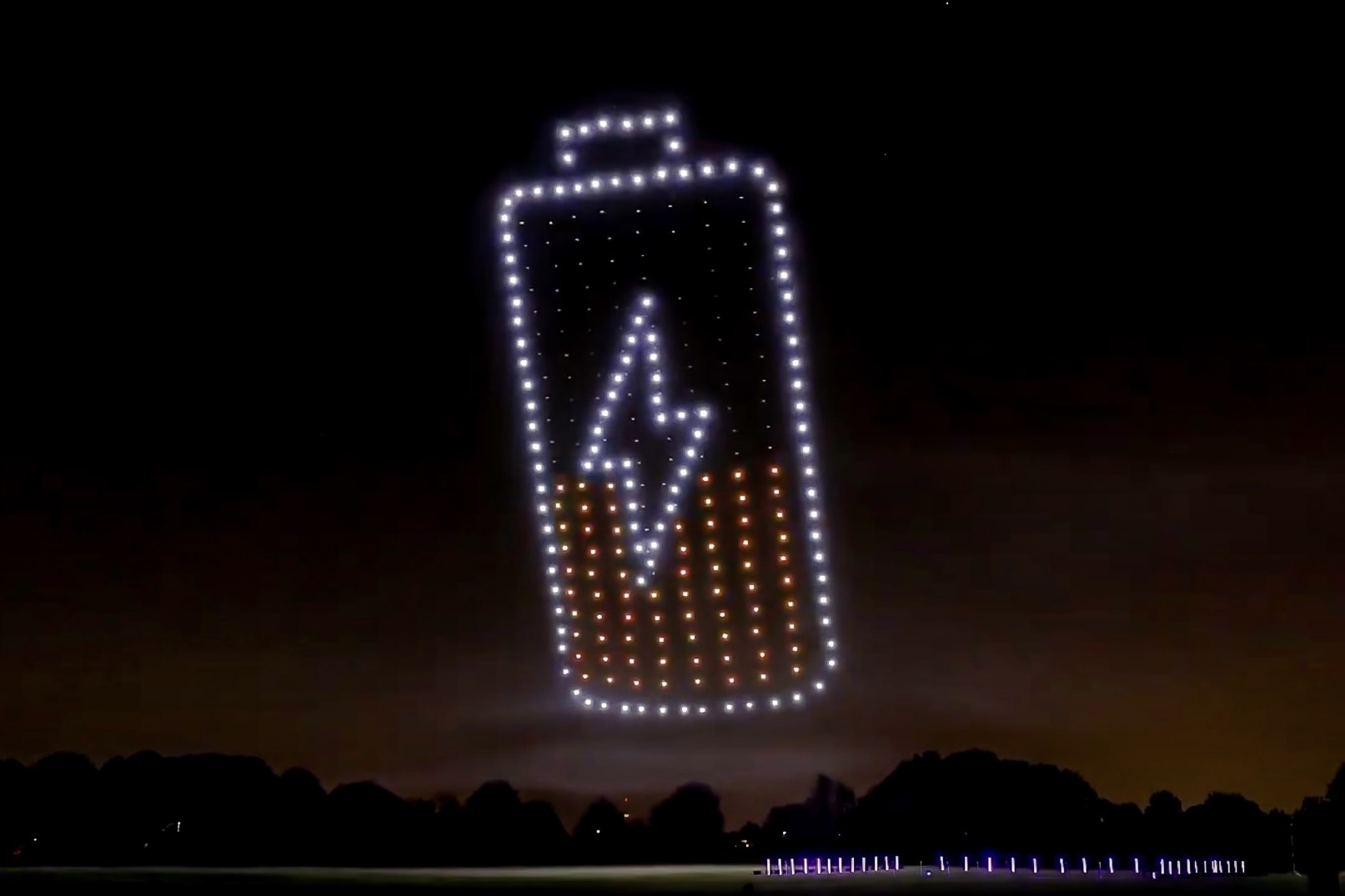
A moment that stays in your memory.
Before take-off, the fleet undergoes extensive pre-flight checks.
Depending on the system status and the specific show, checks include:
Before the actual take-off, the weather conditions and the situation at the event location are always reassessed.
Strong wind gusts, very heavy rain, extreme temperatures and potential icing can affect flight conditions. For this reason, weather data is monitored in advance and also checked directly at the event location.
For a safe and stable Lunatx drone show, wind speeds of up to 9 m/s are well within our operating range. Within these conditions, our systems maintain precise flight stability and reliable choreography. This makes drone shows up to 1 m/s more wind-resistant than pyrotechnic shows.
In stronger winds, ground-level measurements alone are not sufficient, as wind speeds can increase with altitude. Our system can estimate wind speed during a test flight, while ground measurements and meteorological data are also taken into account.
The final decision on whether a show can go ahead is an operational safety decision.
Even if an event has been fully planned, programmed and authorised, the actual conditions are assessed immediately before take-off to ensure the show can be operated safely.
Factors taken into account include:
If safe operation cannot be ensured under the actual conditions, safety takes priority over proceeding with the show.

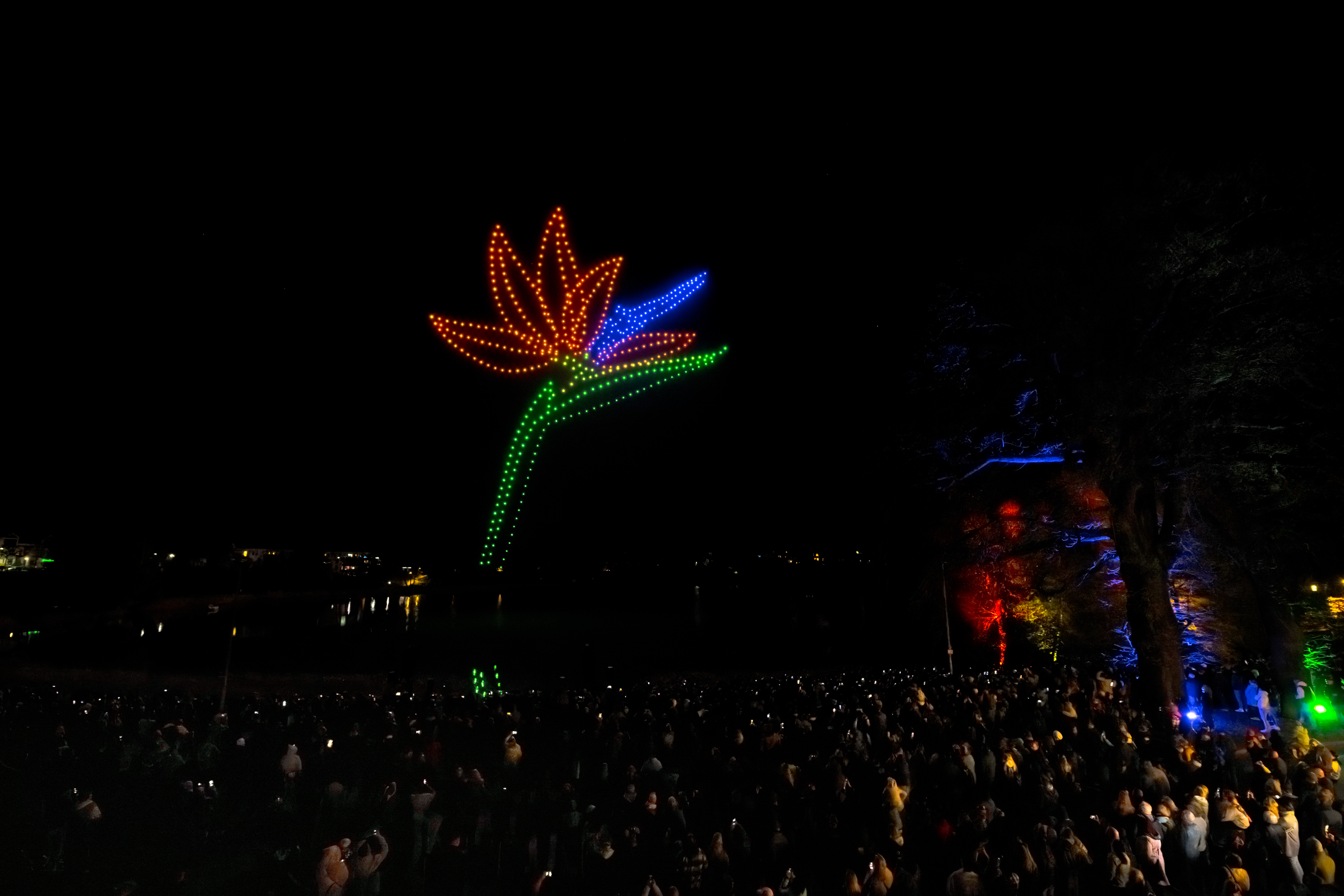
The peacock from the Schlosspark unfolds its glowing tail feathers in the sky above Jever.
Operating a professional drone show requires an appropriately qualified crew.
The underlying authorisation documents require the appropriate level of remote pilot competence; in the LBA operational authorisation provided, A2 is listed as the required remote pilot competency. In addition, specific training and experience in operating the swarm flight system are essential.
Drone shows of this scale in Germany are not treated like ordinary recreational drone flights.
Lunatx SFX operates these shows in the specific category. For this type of operation, the risks of the individual mission are assessed and appropriate technical and organisational measures are defined.
Lunatx SFX operates on the basis of an operational authorisation issued by the Luftfahrt-Bundesamt.
Depending on the event location, additional checks, coordination or approvals may be required. An existing operational authorisation therefore does not mean that a drone show can be flown at any location without prior assessment.
Innovative event technology with show drones
Yes. Professional drone shows are typically performed at night.
A separate additional “night flight licence” is not the determining authorisation requirement. What matters is that the specific UAS operation complies with all applicable operational and legal requirements.
Darkness is, after all, an essential part of the visual impact of a drone show.
The flight paths are coordinated during the programming process. Each drone follows a defined trajectory. Precise positioning, Geoguard, pre-flight checks and continuous system monitoring provide additional layers of control throughout the operation.
The system includes various failsafes. Depending on the type of malfunction, an affected drone may, for example, land, return to the take-off area or, if required for safety, be terminated.
Yes. Lunatx SFX uses an independent Flight Termination System that allows the motors to be shut down if necessary.
This cannot be expressed as a single fixed distance. Safety areas are defined for each project based on the location, flight area and underlying risk assessment.
Yes. Drone shows are performed at night.
Yes. Wind speeds of up to 9 m/s are well within the operating range of Lunatx drone shows. Gusts, wind conditions at flight altitude and the specific conditions at the event location are also taken into account. (As of August 2026)
A safe drone show is the result of professional planning, suitable technology, a qualified crew and a project-specific assessment of the event location.
Do you already have an event location and date? We can assess the key technical and aviation regulatory requirements for your project.
#Drone Shows
#Drone Shows
#Drone Shows

#Drone Shows

#Drone Shows